COSMIC PACHINKO: Life as a Giant Game of Chance (and Choice)
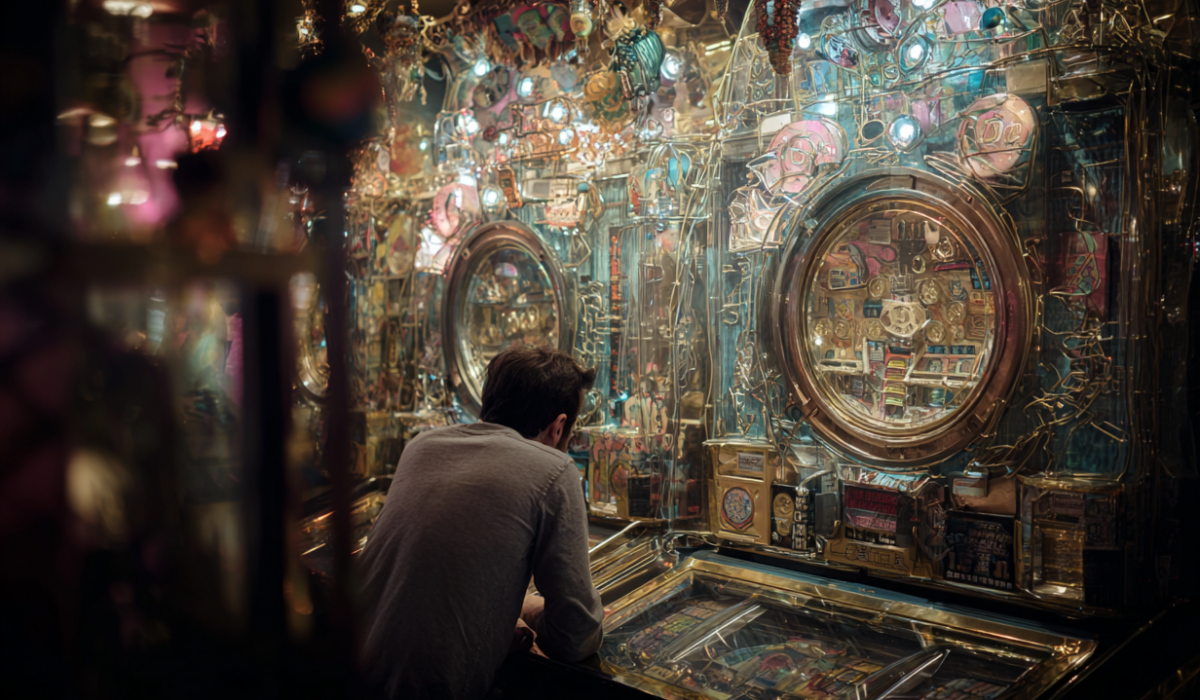
Ever played pachinko? You drop a ball into a machine filled with pins. The ball bounces—left, right, chaotic—ricocheting off obstacles you can’t control. Sometimes it lands in a jackpot slot. Sometimes it disappears into nothing. Same ball. Wildly different outcomes. All based on which pins it hit.
Now imagine: Life is a giant pachinko machine. And you’re the ball.
The Rigged Game
Here’s the brutal truth nobody wants to say out loud: some machines are rigged in your favor, and some are rigged against you.
A child born into a loving family with resources, safety, and support? Their pachinko machine has pins positioned to bounce them toward good outcomes. Education, opportunity, stability—the machine practically guides them to the jackpot slots.
A child born into poverty, abuse, or chaos? Their machine is stacked against them. Every pin seems designed to deflect them toward pain. Trauma, instability, people who should protect but don’t—the bounces lead nowhere good.
Same effort. Same innocence. Same humanity.
Completely different machines.
And here’s what makes it cosmic-level unfair: as a child, you have almost zero control over which machine you’re dropped into.
Childhood: The Ball with No Power
When you’re a kid, you’re a pachinko ball with no say in the game. You can’t choose:
Which pins are in your machine (the people around you)
How they’re positioned (family dynamics, socioeconomic factors)
Where you land (outcomes)
You just… bounce. And hope.
Some children get lucky. Their machine’s pins—loving parents, good schools, safe neighborhoods—guide them gently toward success.
Others aren’t. Their pins—neglectful caregivers, dangerous environments, systemic barriers—slam them toward trauma, over and over.
The child doesn’t control the pins. The perpetrators do. The systems do. The randomness of the universe does.
A five-year-old can’t remove an abusive family member from their life. Can’t choose a different neighborhood. Can’t reposition the structural pins of poverty or racism or violence.
The machine plays them. They don’t play the machine.
And that’s the cosmic injustice nobody wants to face: we tell children they can be anything, do anything—while dropping them into machines rigged against them from birth.
The Illusion of Merit
Society loves the myth of meritocracy. Work hard enough, and you’ll succeed. Pull yourself up by your bootstraps. The American Dream.
Pachinko obliterates that myth.
Because here’s what actually happens: someone born into a machine with supportive pins works moderately hard and succeeds. Society says, “See? Hard work pays off.”
Meanwhile, someone born into a machine rigged against them works three times as hard and still struggles. Society says, “They must not be trying hard enough.”
Same ball. Different machines.
The person who succeeded didn’t work harder—they got luckier pins. The person who struggled didn’t fail—they got a rigged game.
We don’t want to admit this because it shatters the comfortable lie that outcomes equal effort. That success means you deserved it and failure means you didn’t try.
But pachinko doesn’t care about your effort. It cares about which pins you hit.
And as a child? You don’t choose the pins.
Adulthood: When the Power Shifts
Here’s the turning point, though—the place where cosmic pachinko stops being purely deterministic:
As an adult, you gain some power over the machine.
Not total power. Not control over every outcome. But significantly more than you had as a child.
Adult power looks like this:
1. You Can Choose Which Machines to Play
A toxic relationship offers itself? A exploitative job? A situation that feels like the rigged machines of childhood?
As an adult, you can say: “No. I’m not playing this game.”
Walk away. Decline. Refuse to drop your ball into a machine you know is designed to hurt you.
This is huge. Children can’t do this. Adults can.
2. You Can Remove Toxic Pins
People are pins in your pachinko machine. Some bounce you toward joy. Others slam you toward pain.
As an adult, you can:
Cut contact with people who harm you
Set boundaries with those who drain you
Reposition relationships so they affect you differently
Every toxic person you remove = one less pin bouncing you the wrong way.
3. You Can Add Supportive Pins
Every skill you learn, every dollar you earn, every healthy relationship you build, every tool you acquire—these are new pins in your machine.
Pins that bounce you toward better outcomes.
Therapy. Education. Community. Money. Self-awareness. Healing practices.
All pins. All repositionable.
The more you add, the more your machine shifts in your favor.
4. You Can Change Where You Drop In
The pachinko ball drops from the top of the machine. Where it lands affects its entire trajectory.
As an adult, you choose your starting position by choosing who you are.
Drop in as “victim of circumstances”? You’ll hit victim-pattern pins.
Drop in as “person reclaiming power”? Different pins activate. Different trajectory unfolds.
Identity shapes landing position. Landing position shapes outcome.
5. You Can Build an Entirely New Machine
This is the most radical adult power: you don’t have to keep playing the machine you were born into.
You can design a new one.
New city. New career. New identity. New people. New pins, new configuration, new game entirely.
Childhood gave you one machine. Adulthood gives you the blueprints to build your own.
The Quantum Override: “No Way, Not Today”
And then there’s this: some people—rare, but real—develop what we might call quantum authority over the game.
They’re the ones who, when the ball is heading toward a pin they absolutely refuse to hit, somehow… don’t.
The ball jumps. Shifts. Defies the expected trajectory.
Call it will. Call it stubbornness. Call it survival instinct.
It’s the person who was supposed to stay stuck in generational poverty—and didn’t.
The one who should have repeated family trauma patterns—and refused.
The one the machine said would fail—who succeeded anyway.
“No way, not today.”
Not magic. Not guaranteed. But real.
Some balls, through sheer force of refusal, create outcomes the pins didn’t predict.
Still Unfair. But Not Hopeless.
Let’s be clear: cosmic pachinko is still brutally unfair.
You don’t choose your starting machine
Some people get rigged-for-success setups from birth
Random chance still exists
Other people’s free will still affects your bounces
Adult power doesn’t erase childhood injustice. Doesn’t undo the trauma of a rigged early game. Doesn’t guarantee outcomes.
But it does give you leverage you didn’t have before.
The child had 5-10% power over the machine.
The adult? 60-75%.
Not omnipotent. But not powerless either.
You can’t control every bounce. But you can:
Choose which games to play
Remove pins that hurt you
Add pins that help you
Reposition yourself
Build new machines
Refuse certain outcomes with enough force of will
The game is still rigged. But you’re no longer just a ball bouncing helplessly.
The Work Ahead
So what do you do with this?
Audit your current machine. What pins are in it? Who’s bouncing you toward pain? Who toward growth? What resources are missing?
Remove what harms. Toxic people. Draining situations. Patterns that re-traumatize.
Add what supports. Skills. Money. Healing. Community. Tools.
Reposition yourself. Who are you dropping in as? Victim or sovereign? Powerless or reclaiming power?
Build new, if needed. If your machine is too broken, design a different one entirely.
And when you’re heading toward an outcome you refuse to accept?
Say it out loud: “No way. Not today.”
And watch what happens.
Life is cosmic pachinko. Wildly unfair. Chaotically random. Structurally rigged for some, against others.
But you’re not five years old anymore.
You have power now. Use it.